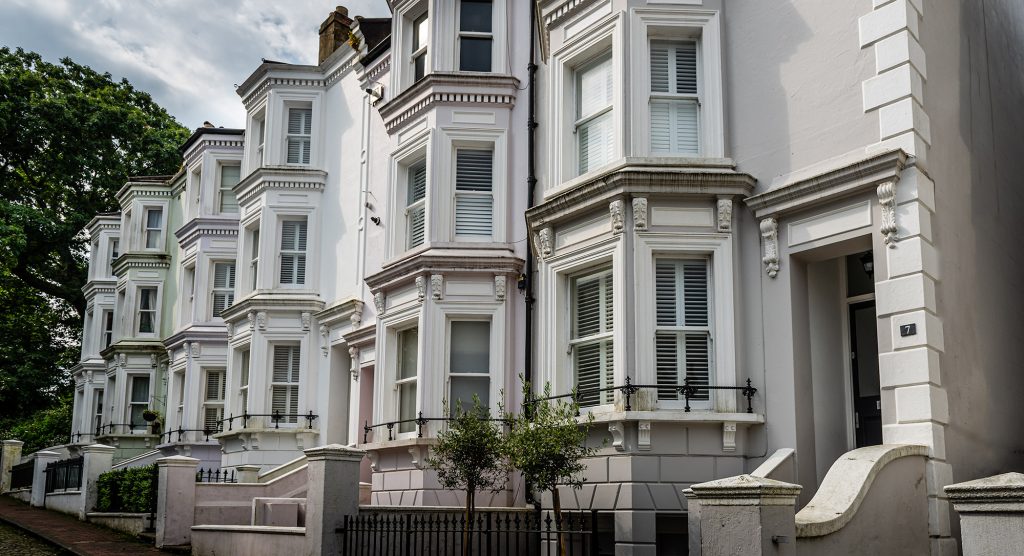
From the historic timber-framed structures of Rye and Lewes to the iconic Regency terraces of Brighton and Hove, East Sussex boasts an incredible wealth of heritage architecture. However, owning a piece of local history comes with unique responsibilities—particularly regarding insurance.
Mainstream insurance providers are moving away from automated renewals. Instead, they frequently make it a mandatory policy condition to obtain a professional reinstatement cost assessment for listed buildings in East Sussex conducted specifically by an RICS Chartered Surveyor.
This requirement is not a bureaucratic hurdle. It is a vital risk-management safeguard designed to protect property owners from catastrophic underinsurance driven by market volatility, surging inflation, and strict UK heritage legislation.
Market Value vs. Rebuild Cost: The Heritage Property Trap
A persistent point of confusion for property owners across Sussex is the difference between what a property is worth on the open market and what it costs to reconstruct.
Market Value: Driven entirely by location, local school catchments, land values, and macroeconomic supply and demand.
Reinstatement Cost: The actual financial cost to safely demolish, clear, and rebuild the property from the foundations up following a total loss—including all professional, statutory, and specialist artisan fees.
For standard modern properties in Sussex, the cost to rebuild is frequently lower than the market value. For historic and listed structures, this dynamic is completely inverted. Due to the rare materials and specialist labor involved, a listed property can cost 30% to 60% more to rebuild than a modern equivalent of the same size. Relying on an old mortgage valuation or purchase price leaves owners dangerously exposed.
Why Generic Rebuild Calculators Fail Sussex Heritage Assets
Many mainstream insurers allow standard homeowners to use online automated models—such as basic standard square-metre matrices—to estimate their insurance sum insured. However, these algorithms are fundamentally designed for modern, uniform construction.
Listed buildings do not behave like modern builds. East Sussex properties frequently feature unique regional architectural details—such as hand-made mathematical tiles, local flint work, Wealden oak timber frames, Horsham stone roofing, and traditional lime plaster. These require specialized, highly scarce trade labor. Attempting to use a standard software matrix to value a Grade I, Grade II*, or Grade II listed structure systematically underestimates the true risk, which is why insurers now block generic online calculators for heritage assets.
Statutory Controls and "Like-for-Like" Legal Obligations
When a modern building suffers severe damage, it can be replaced using cheaper, modern materials and rapid, prefabricated building techniques. When a listed building suffers a fire or flood, the owner is legally obligated under UK heritage law to reinstate it like-for-like using traditional methods and materials.
This introduces massive "soft costs" that are invisible to an automated calculator:
- Local Conservation Approvals: Navigating listed building consent with local authorities—such as Lewes District Council, Rother District Council, or the South Downs National Park Authority—can add months or years to a project timeline, compounding site and scaffolding costs.
- Bespoke Professional Fees: Rebuilding requires specialized heritage architects, historic building consultants, and structural engineers whose fees greatly exceed standard commercial rates.
- Complex Demolition & Salvage: Clearing a damaged historic site requires meticulous forensic demolition to salvage surviving historic fabric under the guidance of conservation officers, rather than simply bulldozing the remains.
The Impact of Rising Construction Inflation
The economic volatility of recent years has exacerbated the issue. Supply chain disruptions, material shortages, and a shortage of specialized heritage craftspeople across the South East have caused building costs to climb sharply.
Property rebuild costs continue to rise annually. A reinstatement cost assessment by a chartered surveyor evaluation that was set just a few years ago—and left unreviewed—could easily be underinsured by 15% to 30% on inflation alone. Insurers require a contemporary, line-by-line assessment to ensure the policy reflects today’s true economic reality.
The Financial Danger: Understanding the "Average Clause"
The primary reason underwriters mandate a professional RICS building insurance valuation is to protect both parties from the devastating effects of the Average Clause.
If a listed building is found to be underinsured at the time of a claim, the insurance provider is legally entitled to reduce their payout proportionally.
By mandating a formal RCA, insurers obtain an accurate baseline. In return, many underwriters will explicitly waive the Average Clause, giving the property owner complete peace of mind that valid claims will be paid out in full.
Protect Your East Sussex Property and Secure Your Policy
Do not wait for a renewal dispute or an understated claim to discover your true risk exposure. Our team of experienced RICS Surveyors specialises in accurate, comprehensive Reinstatement Cost Assessments for historic and listed buildings.